Residents’ Association
A Man Called OveThe Residents’ Association gives the row-house neighborhood a framework for shared rules and decisions, while also becoming a stage for Ove and Rune’s changing alliance and enduring rivalry. Its work ranges from signs, waste disposal, and the shared lawn to disputes over cameras, snow clearance, and who gets to lead. The association’s story shows how the desire to keep a community orderly can foster cooperation, then turn everyday differences into a lasting contest over authority.
Formation and Early Work
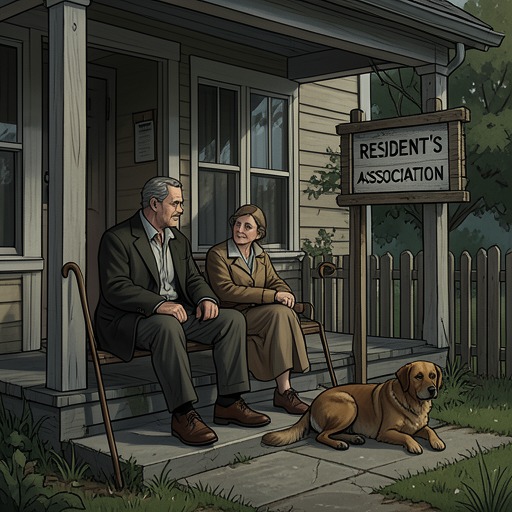
When Ove and Sonja and Rune and Anita moved into the area on the same day, Ove and Rune initially worked together rather than against each other. They helped establish the Residents’ Association as new people began moving into the neighborhood. After consulting in Ove and Sonja’s kitchen, they created a shared framework of rules, put up signs clarifying what residents could and could not do, and set up a steering group. Ove became chairman and Rune vice chairman.
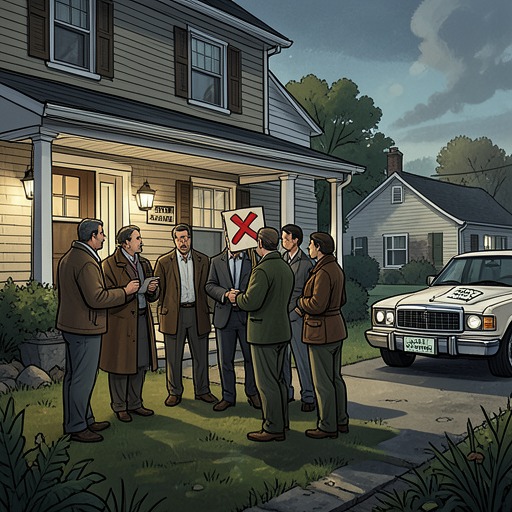
The two men treated the association’s work as practical supervision. In the months after its formation, they went to the dump together, challenged people who parked incorrectly, and tried to secure better prices on paint and drainpipes. When a telephone-company worker came to install telephone lines and jacks, they stood on either side of him and directed his work, although neither man knew exactly how the cables should be installed. Their confidence came less from technical expertise than from a shared conviction that residents should keep a close eye on work affecting their homes.
Their joint efforts also extended beyond routine neighborhood management. When the Local Council and Administrative Authorities planned to cut down the forest behind their houses to make room for more homes, Ove and Rune opposed the plan together. They pursued appeals, legal filings, petitions, and letters to newspapers for a year and a half; the council eventually abandoned the plan and began building elsewhere. The campaign established that the association’s founding partnership could also serve as a vehicle for collective resistance to decisions made outside the neighborhood.
Rules and Everyday Oversight
Order was not an abstract principle for Ove. As chairman, he pressed for surveillance cameras in the trash room to catch residents disposing of unauthorized waste. Other residents rejected the proposal: they felt uneasy about being filmed and worried about the burden of storing the recordings. Ove argued that people with honest intentions had nothing to fear from the truth, but his neighbors did not accept that rationale as sufficient.
Two years later, after Ove had lost the chairmanship, the camera question returned in a different form. The new steering group proposed a motion-activated system that would send footage to the Internet, cover both the trash room and parking area, and erase recordings automatically after twenty-four hours. Because installation required unanimous approval, the proposal failed when Ove alone voted against it. His objection was not a change of heart about surveillance: he distrusted the Internet and did not want it recording his own waste disposal. He concluded that the cameras were unnecessary because his daily inspections gave him a better sense of who was doing what.
The contrast captures two competing approaches to neighborhood oversight. The newer proposal used automated recording and a time limit on stored footage; Ove preferred direct observation and personal control. Neither approach produced the cameras. The association’s decisions could therefore be shaped both by collective unease about privacy and, where unanimity was required, by one member’s refusal.
Leadership and Rivalry
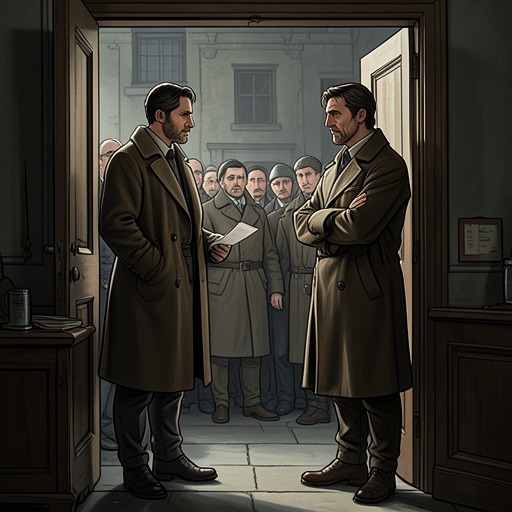
Ove and Rune’s early partnership deteriorated into a dispute over leadership. Rune pushed through the change that removed Ove as chairman, which Ove later called a coup d’état. According to Anita, the two had already had a quarrel when Rune was elected after Ove, though the disagreement was not reducible to one isolated vote. Ove blamed Rune for the association’s subsequent problems and stayed away from every later meeting.
For Ove, those problems were visible in ordinary breaches of order: higher electricity bills, bicycles left outside the bike shed, and trailers backing into the residential area despite signs prohibiting it. He regarded these failures as evidence that the association had lost the discipline he had tried to maintain. His absence from meetings turned the chairmanship dispute into a continuing estrangement from the organization itself, even as he remained attentive to what residents did around him.
The rivalry was mutual but did not erase their shared history. Before the leadership conflict—and before Rune bought a BMW—the men had been friends and had defended the forest together. Their arguments later extended to management of the common lawn behind their homes. Sonja and Anita called it the neutral zone; Ove and Rune had agreed that Ove would mow it. When other residents suggested adding tables and benches to make it a communal gathering place, the two men stopped the proposal. In a later winter dispute, Rune wanted the association to buy a large snowblower and take charge of snow clearance. Ove opposed the expense and feared that the machine would throw snow against his windows. The lawn and the snowblower became, like the cameras, practical questions that also tested who could define the neighborhood’s needs.
The Association and a Changing Neighborhood
The association’s rules and disputes unfolded amid decades of turnover. In nearly forty years, many kinds of residents passed through the houses, including people who left bicycles out, planted unapproved bushes, or wanted to paint a house pink. Ove and Rune disagreed about plenty, but they shared the view that the people living in the house between theirs were often difficult neighbors. Their common suspicion of successive occupants outlasted periods of friendship and helped preserve a point of connection beneath their quarrels.
The association’s sphere of concern was not limited to formal votes. The shared lawn had no clearly established purpose beyond its presence in the housing plans, yet it became a subject of decisions about mowing, furniture, and communal use. In these small matters the organization’s character comes into focus: it was made consequential by residents’ repeated efforts to decide who maintained shared space, what counted as acceptable conduct, and who had the authority to enforce their standards.
Narrative Significance
The Residents’ Association brings the book’s concerns with practical competence, dignity, and generational identity into the neighborhood’s public life. Ove and Rune belong to a generation for whom a person’s worth is closely tied to what that person does and can manage without help. Their leadership is expressed through signs, inspections, repairs, mowing, and resistance to plans they consider misguided. Those habits create real cooperation, as the forest campaign demonstrates, but they also make disagreement over a bill, a lawn, or a snowblower carry the weight of a judgment about how people ought to live.
The association is neither simply a source of community nor merely an arena for conflict. It gives residents a way to act together, yet its rules cannot prevent residents from ignoring them, and its meetings cannot reconcile Ove and Rune. Ove’s long absence after losing the chairmanship does not end his investment in the neighborhood; instead, he continues to measure its condition against the order he believes the association should have protected. The institution remains the setting where shared responsibility and personal authority meet, and where a lifelong friendship can survive as a history of cooperation even when its present form is antagonism.